
Most people treat pet urine as an odor nuisance and nothing more. For a single fresh accident, that's fair. But urine that sits in carpet and pad for weeks or months does more than smell. It changes the air you breathe in that room, it gives mold and bacteria a place to grow, and given enough time it can reach the wood under your floor. Knowing how that progression works tells you when a spot is harmless and when it's quietly turning into a repair bill.
What it does to the air in the room
As urine breaks down, bacteria release ammonia. You know the smell. That sharp, eye-watering note that hits hardest in a closed room on a warm day is ammonia gas coming off the deposit. In a small or poorly ventilated space it can build to a concentration that genuinely bothers people, and it tends to be worse for anyone with asthma, allergies, or general sensitivity to airborne irritants.
The deposit also feeds bacteria and supports dust mites and other allergens that live in carpet. So a urine-soaked pad does more than smell. It adds biological junk to the air every time someone walks across it and pushes air up out of the fibers. People often notice their allergy symptoms easing after a contaminated spot is properly treated, and that's why.
Mold and bacteria in a damp pad
Carpet pad is the perfect host for trouble. It's absorbent, it stays dark, and a urine deposit keeps it damp. Uric acid crystals make this worse because they pull moisture out of the air, so the pad never fully dries between humid days. Warmth, moisture, and an organic food source are exactly what mold and bacteria need to colonize.
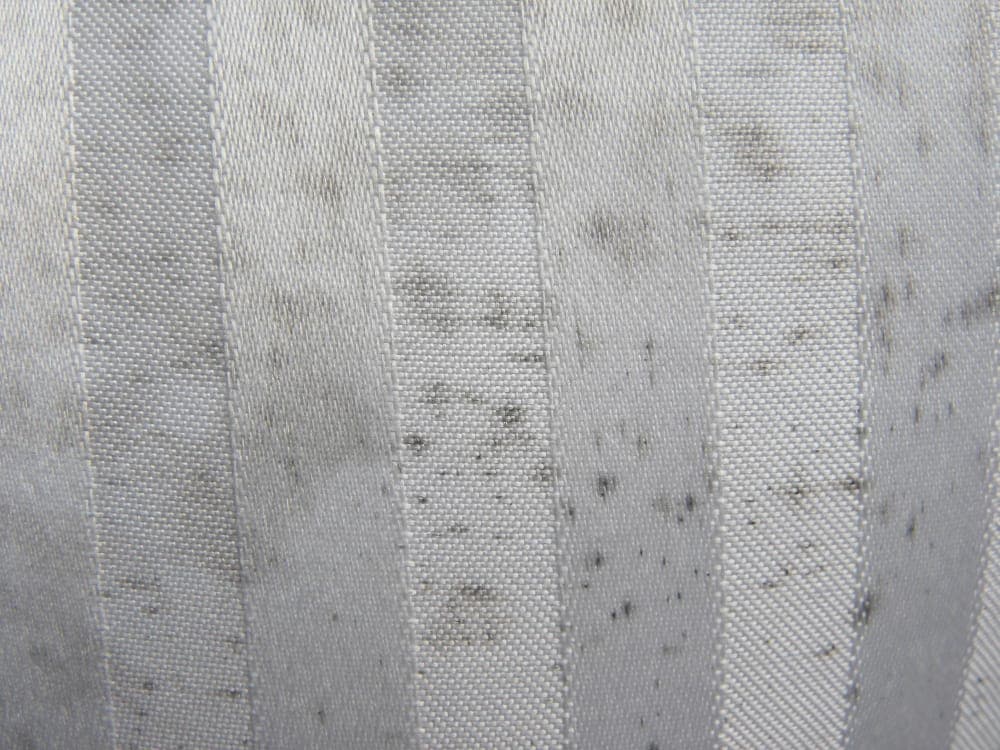
Once mold takes hold in the pad, you usually can't see it from above. The carpet looks normal while the layer underneath grows. That hidden growth adds a musty smell on top of the ammonia and puts more spores into the air. This is the point where a pet problem and a moisture problem become the same problem, and surface cleaning does nothing for either one.
How deep pet urine goes
Surface cleaning vs. treating the source
Carpet fibers
What you see, vacuum, and spot-clean
Carpet backing
The woven base the fibers are tufted into
Padding / cushion
Where urine pools and bacteria multiply
Subfloor
Plywood or concrete the odor soaks into
When urine reaches the subfloor and hardwood
If urine goes through the pad, the next stop is the subfloor. On plywood or OSB subfloor, repeated soaking causes staining, swelling, and eventually delamination, where the layers of the board separate. The smell soaks into the wood itself, and at that stage cleaning the carpet alone won't fully clear it because the source has moved into the structure.
Hardwood is even less forgiving. Urine that reaches a hardwood floor seeps into the seams between boards and past the finish, where it reacts with the wood and leaves dark black stains that bleach and sanding often can't fully remove. Severe or long-term exposure can warp boards or rot them at the seams, which means replacing planks rather than refinishing them. Wood accidents are their own challenge, and we cover them in detail in our guide to dog urine on hardwood floors.
Cosmetic vs. structural: where the line is
A spot is still cosmetic when the damage is limited to odor and a surface stain, the urine hasn't penetrated deep, and there's no sign of mold or soft flooring. These respond well to proper treatment and leave nothing behind.
It crosses into structural when you find a musty smell layered under the urine, discoloration spreading on the subfloor, soft or spongy spots in the floor, black staining on hardwood, or an odor that fills the room and won't let go no matter how often you clean the carpet. The same spot used over and over is the usual path from one category to the other, and we walk through that in our piece on old, set-in pet urine stains.
Why early treatment saves money
The math here is simple. A fresh accident is the cheapest thing in this entire article to fix. Treat it while it's still in the carpet and the cost is a cleaning. Let it work down into the pad and you're replacing pad. Let it reach the subfloor and you're into repairs, sealing, or board replacement, which runs into real money and real disruption. The deposit doesn't get easier or cheaper to deal with the longer it sits.
Catching it early also keeps it from becoming an air-quality and mold issue you have to remediate separately. When a Safe-Dry technician inspects a spot, they scan it under UV to find how far it actually spread, treat the contaminated zone at depth with enzymes that destroy the uric acid source, and give you a firm price after seeing the real extent of it. The work carries a 14-day odor guarantee. If you've got a spot that's been there a while, or a smell that won't quit, find your local Safe-Dry team and have it checked before it works its way into something you have to rebuild.