
Getting Cat Urine Smell Out of a Couch
A couch is the worst place for a cat to pick. The cushions act like a sponge, and the part holding the smell is buried where you can't get to it. Here's what's actually going on.
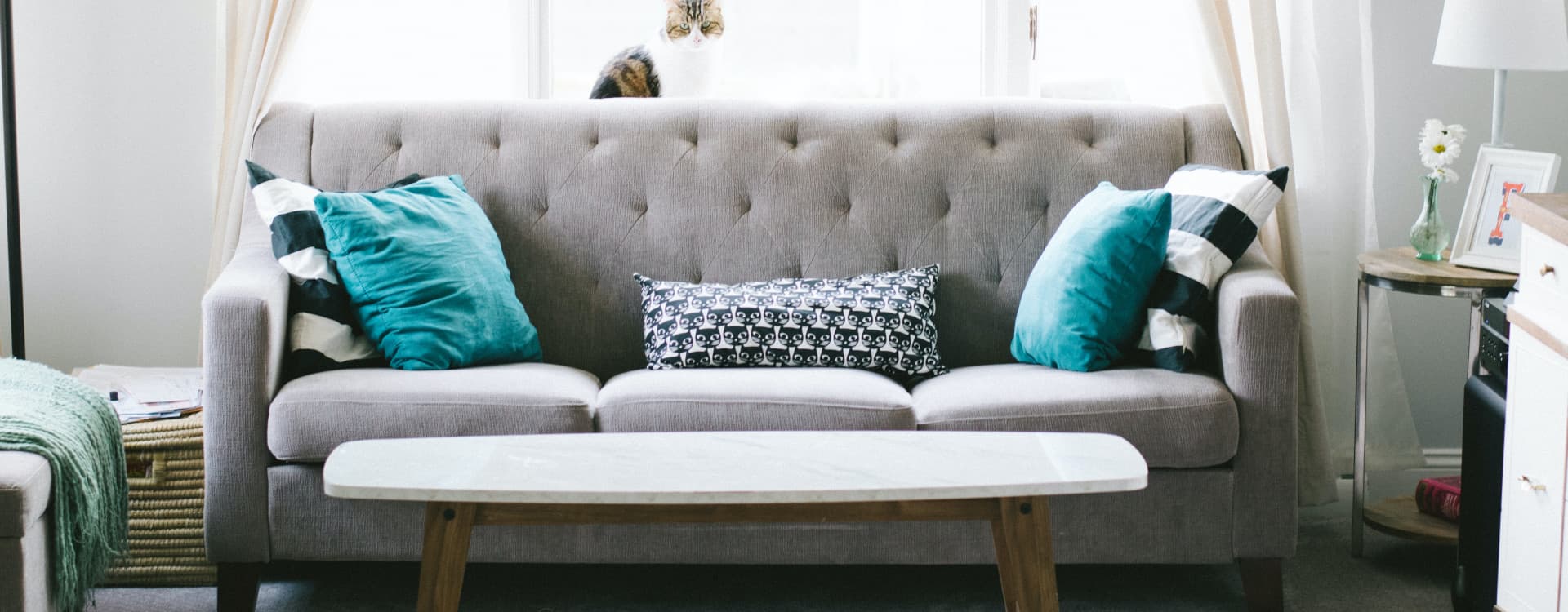
A lot of our work is everyday upholstery cleaning, the kind that revives a tired sofa or lifts a spill off a favorite chair. That's bread and butter for us. The reason you're reading this, though, is the tougher version: cat urine worked down into the cushions where a wipe-down can't reach. That's the upholstery job we specialize in.
Why the smell keeps coming back
Most people start with whatever is under the sink. A spritz of fabric cleaner, maybe an enzyme spray from the pet aisle, and the cover looks clean again within an hour. The trouble is that you treated the one layer the urine passed through on its way down. The smell isn't living on the surface you can reach.
Cat spray makes it worse. When a cat marks furniture, the spray is oilier and more pungent than a normal accident, and it tends to land high on the arm or back of the couch and run down inside the fabric. You can scrub the visible mark off the weave and still have a couch that smells, because the spray wicked into the padding behind it.
Fabric refreshers and steam from a rented machine both have the same blind spot. The refresher lays a scent over the top for a day or two. The steamer pushes hot water and a little soap into the cover, then pulls some of it back, but it never touches the foam core. Worse, forcing extra moisture into a cushion that already has dried urine in it can wake the smell back up.
You can wash a cushion cover. You can't rinse the foam inside it, and that's where the smell actually lives.
What makes a upholstery different
A couch is built in layers that behave very differently. There's the cover fabric, then a thin batting, then the dense foam or fiber fill that gives the cushion its shape, and under all of it the wood or webbing of the frame. Liquid does not stay put on the cover. It runs along the weave, finds the seam or the zipper line, and drains straight into the fill, which is exactly where a cushion is designed to hold things. The same structure that makes a cushion comfortable makes it a reservoir for odor.
Here's the part that traps people: you can unzip a cushion cover and wash it, but you cannot lift the foam core out and rinse it. That block of foam holds the uric acid from the urine, and uric acid does not dissolve in water. It sits in the fill and reactivates whenever the room warms up or the humidity climbs, releasing that ammonia note again. A black light run across the cushion usually shows the spread soaked far wider inside than the stain you can see on the cover.
How Safe-Dry® gets it out for good
Safe-Dry treats the cushion as a whole unit, not just the panel you can see. Your technician checks the cover, the fill, and the frame contact points with UV light to map how far the urine actually traveled, then applies a pet urine restoration treatment engineered to break down the uric acid crystals cat urine and spray leave behind. The enzymes convert those crystals into compounds that evaporate, so there is nothing left in the foam to flare up on the next warm day.
Before any of that, the technician reads the fabric code stitched onto the furniture. W means it can take a water-based treatment, S means solvent only, and X means vacuum and gentle methods alone. That code decides how the cushion gets cleaned, because the wrong approach on the wrong fabric can shrink a cover or leave a ring. The treatment reaches the depth the urine reached, every Safe-Dry job carries a 14-day odor guarantee, and you get a firm price after the inspection with no surprise add-ons.
The same restoration treatment is explained in detail on our how enzyme treatment works page, and every job is backed by our 14-day odor guarantee.
Frequently asked questions
I washed the cushion cover and the couch still smells. Why?
Because the cover is only the top layer. The urine drained through it into the foam fill, and that block of padding holds the uric acid that causes the odor. You can't remove the foam to rinse it the way you can the cover, so the smell stays until the fill itself is treated with an enzyme that breaks the crystals down.
What's the difference between cat spray and a regular accident on a couch?
Spray is a marking behavior, and it's oilier and stronger than ordinary urine. It usually hits high on the arm or back of the couch and runs down inside the fabric, so it contaminates the padding behind the visible mark. Both leave uric acid in the fill, but spray tends to spread over a wider area, which is why we map the full zone with UV before treating.
Why do those fabric codes (W, S, X) matter?
They tell us what your couch can safely handle. W fabric tolerates a water-based restoration treatment, S fabric needs a solvent-based method, and X fabric can only take dry vacuuming and gentle work. Using a water-based clean on an S or X fabric can leave a ring or shrink the cover, so your technician checks the tag and adjusts the method before starting.
Can the couch be saved, or do I need to replace it?
Most couches can be saved. As long as the frame is sound and the foam isn't physically rotting, a restoration treatment that reaches the fill will clear the odor. We tell you straight during the inspection if a cushion is too far gone to be worth treating, but that's the exception, not the rule.
Related pet odor problems we solve
Dog smell on couch
That heavy dog smell is body oil, dander, and saliva worked into one favorite cushion. We deodorize the fill rather than perfume the cover.
SpecialCat spray & marking
Marking carries extra protein and pheromones and lands on baseboards and furniture, not the floor. We find it with UV light and break it down.
CarpetCat urine in carpet
Cat urine dries into uric acid crystals that wake up again on humid days. Restoration treatment breaks them down in the backing and pad.
Ready to get the smell out for good?
Enter your zip code to reach your local Safe-Dry® team. We treat pet urine and odor across 523 locations in 6 states, with same-day appointments in most areas.