
UV stain detection: finding the urine you can't see
The hardest part of pet odor isn't treating it. It's finding every deposit, including the old ones hiding in plain sight. That starts with a black light.
Why the visible stain lies
When a pet has an accident, gravity pulls the liquid down and outward. By the time it dries, the worst of the contamination has spread through the carpet backing into the pad, often well beyond the edge of anything you can see on top. Clean the surface and the spot disappears, but the deposit underneath stays put and keeps producing odor.
This is the single biggest reason DIY treatments fail. You treat a four-inch mark, the real deposit is twelve inches across, and the math never works out. Older homes and rescued pets make it worse, because nobody knows where all the accidents happened or how many there were.
What the black light shows
Dried urine fluoresces under ultraviolet light. With the shades drawn, your technician sweeps a UV lamp across the floor and the deposits glow, mapping out the true size and location of every spot. Stains that have been invisible for years suddenly show themselves, which means they finally get treated instead of skipped.
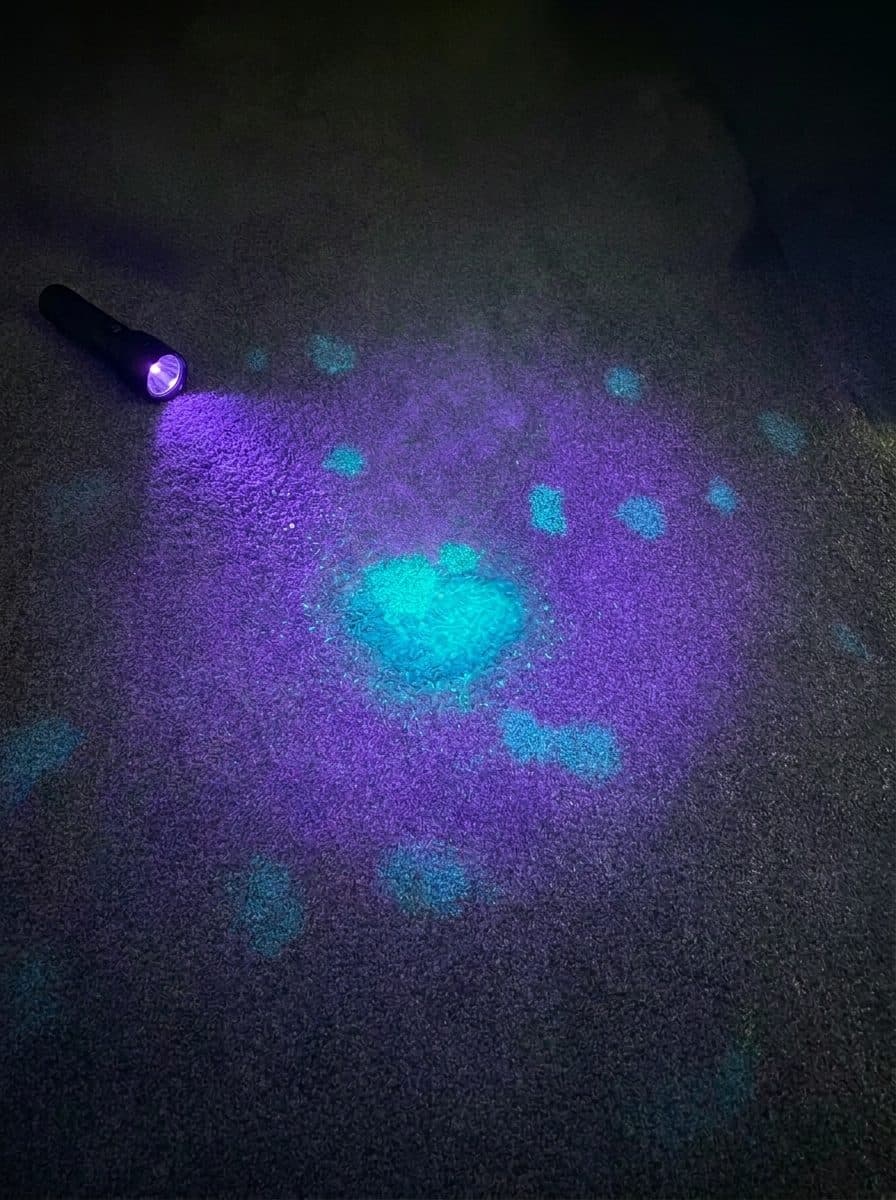
Once the full picture is mapped, the restoration treatment gets applied to the whole affected area at the depth the urine reached. Finding it and treating it are two halves of the same job, and skipping the first half is why the smell keeps coming back.
This step matters most for old, set-in stains and any home where the history of accidents isn't fully known.
Common questions
Why can't I just treat the spots I can see?
Because the spot you see and the contamination underneath are rarely the same size. Urine spreads outward as it soaks into the pad, so a coin-sized stain on top can be a dinner-plate deposit below. Treating only the visible mark leaves most of the odor source in place.
How does UV light reveal urine?
Dried urine contains compounds that fluoresce, meaning they glow, under ultraviolet light. In a darkened room, old and invisible deposits light up as dull yellow or greenish patches, including ones that were cleaned on the surface years ago.
Does the black light work on every surface?
It works well on carpet, rugs, upholstery, and mattresses. Results vary with fabric color and material, so your technician combines the UV survey with a moisture check and their own experience to map the full affected area.
Ready to get the smell out for good?
Enter your zip code to reach your local Safe-Dry® team. We treat pet urine and odor across 523 locations in 6 states, with same-day appointments in most areas.